

Deir-ez-Zor Shelter Rehabilitation and Livelihoods Project Reaches Key Milestones, Supporting Over 4,000 Beneficiaries
Deir-ez-Zor – Thursday, 5 March 2026 – The Fund’s Shelter Rehabilitation and Livelihoods project, “Enhancing Sustainable Livelihoods and Housing in Deir-ez-Zor Governorate – Phase II”, has achieved substantial progress, successfully completing two of its three core components.
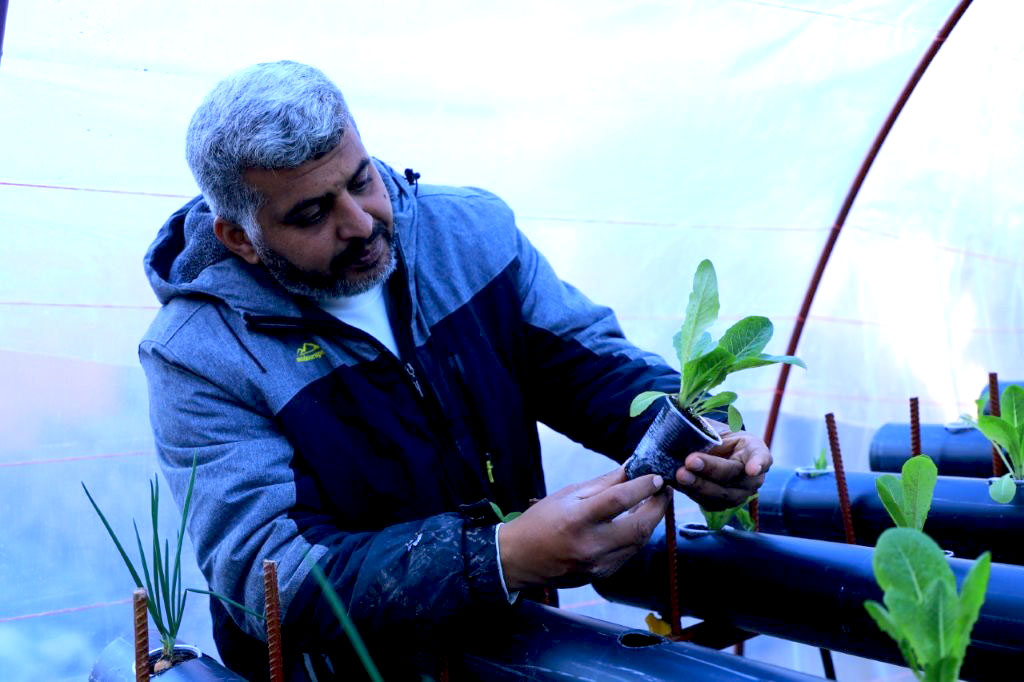
To date, the project has distributed 1,000 home garden kits to 1,000 households, including 50 hydroponic kits provided to selected families. Comprehensive training sessions accompanied these distributions to ensure beneficiaries are equipped with the knowledge and skills needed for effective planting, crop management, and harvesting, ultimately strengthening household food production and resilience.
Under the Cash-for-Work (CfW) component, 3,000 individuals have participated in short-term employment opportunities. Participants contributed to planting and maintaining thousands of trees, cleaning public facilities, and carrying out minor repairs to irrigation canals and other community infrastructure. To support safe and efficient implementation, workers received safety training, essential tools, and irrigation support for newly planted trees.
Progress also continues under the shelter rehabilitation component. To date, 628 homes out of a targeted 1,400 have been fully rehabilitated. Rehabilitation works include the repair and installation of doors, windows, and walls; plastering; water tank repairs and water network connections; as well as electrical works, restoring safe and dignified living conditions for hundreds of families.
The project continues to advance toward full implementation, contributing to improved livelihoods, strengthened community infrastructure, and enhanced housing conditions across Deir-ez-Zor Governorate.
Um Mohammad, a beneficiary told us: “God bless the [SRTF] team, they provided us with seeds, fertilisers, irrigation kits among other agricultural inputs, and trained us on how to plant using the drip irrigation method so we can improve the quality and quantity of our harvest. We benefitted a great deal, given that the area is still in dire condition. We are grateful for your work and efforts.
This project is helping us in settling back into our homes, as the seeds you provide, including onions, garlic and beans, are necessary in our diet, and so being able to plant them in our own homes relieves us from the financial burdens of securing essential food items and allows us to become self-sufficient.”
Abu Mohammad, a beneficiary under the CfW component, expressed his gratitude, saying: “Under this project, we work from 8am till 2pm, we are around 500 individuals…We clean streets, schools and irrigation channels in the area. Our area is highly dependent on farming, so such efforts benefit farmers a great deal. We also remove shrubs that are along the roads and in public spaces and we plant trees in schools as they make them look more appealing and help in purifying the surrounding air.
The income we receive through this work helps us in securing some of our necessities, in covering essential costs including rent and medical expenses, and in attending to our children’s needs. This project also helped us in improving social cohesion within our community and in developing relationships with our neighbours.”
This project has a budget of around EUR 2.59 million and is expected to directly benefit around 17,700 individuals across Deir-ez-Zor Governorate, prioritising returnees from Al-Hol Camp and host community members. Such efforts contribute to promoting community resilience and social cohesion, improving food security within communities and enhancing economic stability, while promoting sustainability and self-sufficient practices.
For more information on this project, please see:
Enhancing Sustainable Livelihoods and Housing in Deir-ez-Zor Governorate – Phase II
For more information on the SRTF visit:
Media outlets may contact:

 Linkedin
  Twitter
 Site Map