

Revolving Credit Fund (RCF) to Support Livelihoods Recovery in Aleppo – Phase III
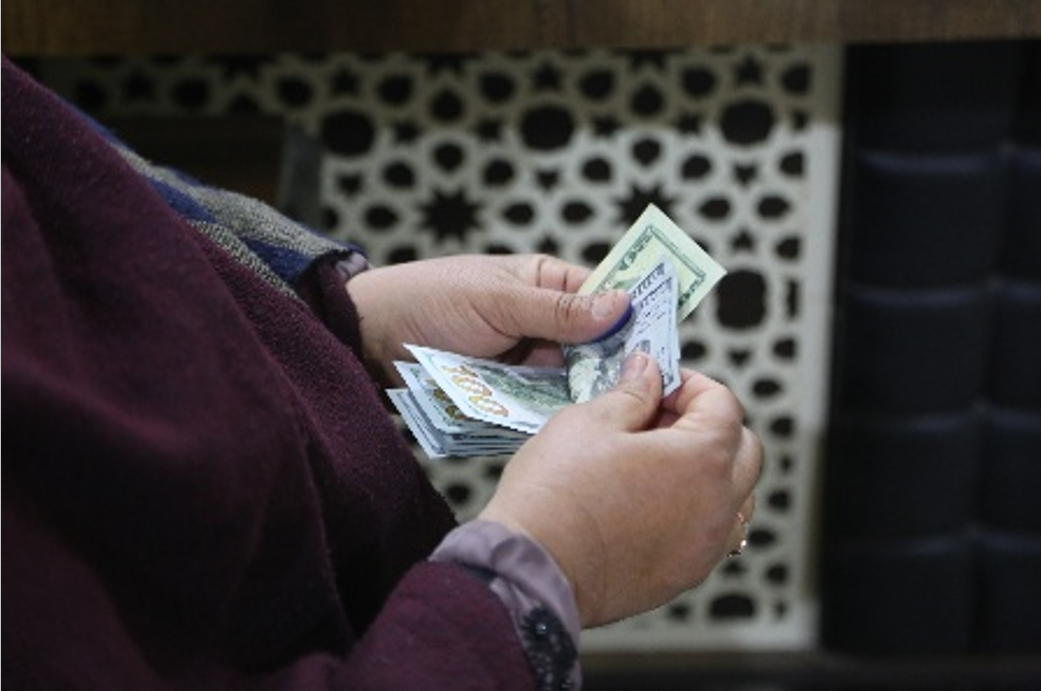
Based on the successes of its previous phases, the Syria Recovery Trust Fund (SRTF) launched Phase III of its Livelihoods project, “Revolving Credit Fund (RCF) to Support Livelihoods Recovery in Aleppo”, in coordination with its Implementing Entity (IE), Near East Foundation, and Siraj Financial Services (SFS).
This project aims to address structural and operational constraints that limit the growth of small and medium enterprises while promoting equitable access to opportunities for all loan borrowers, ensuring 50% of them are women. It seeks to enhance productivity, optimise business processes and individualised advisory services, improve product and service development and expand market access, thereby, securing sustainable livelihoods and economic resilience.
This project is expected to:
- Empower business owners and entrepreneurs through tailored financial services and products and business development services.
- Empower individuals through training assistance and non-financial services.
- Improve access to finance and capacity-building support.
- Enhance market systems.
- Enhance broader community economic resilience.
- Continue to optimise the outreach and impact of individualised advisory services.
- Boost the financial sustainability of the RCF.
- Expand the client base of the RCF.
This will be done by implementing the following activities:
- Providing tailored financial assistance (loans) to at least 1,347 individuals; including 506 who will receive micro-loans (ranging between EUR 400 and EUR 1,200) and 841 who will receive development and agricultural loans (ranging between EUR 1,201 and EUR 3,500).
- Providing non-financial capacity-building training sessions to individuals, on various topics including business development, financial literacy, leadership skills, navigating cultural norms and essential life skills, to improve their entrepreneurial capacity, enhance economic empowerment and foster sustainable personal and professional development.
- Providing technical assistance to 3,050 individuals, including tailored and sequenced training programmes according to the type of business, ahead of loan disbursements. These programmes include sessions on business development, life skills, financial literacy, marketing and market access, on-demand vocational training, business ideation, planning and development, market research and digital marketing.
- Providing agricultural technical training sessions to an estimated 200 individuals of the total 3,050, equipping them with practical, market-relevant skills to improve farm productivity, efficiency and agribusiness operations.
- Establishing a new Siraj Financial Centre in Aleppo city, which will provide inclusive financial and non-financial services, including training sessions and access to loan products, thereby, ensuring the provision of comprehensive support for entrepreneurs.
- Maintaining operations through existing Siraj Centres in Azaz, Mare’, Al-Bab and Jarablus, ensuring broad geographic coverage and equitable access to services across Northern Aleppo.
- Providing tailored support following loan disbursement, to address individual challenges, enhance business performance and foster resilience among entrepreneurs.
- Supporting more underserved women in targeted communities.
This is anticipated to:
- Increase borrowers’ business revenues and enhance productivity.
- Improve borrowers’ growth in net income.
- Increase employment opportunities in the area.
- Enhance entrepreneurs’ skills and confidence to ensure the sustainability of their businesses.
- Expand market access.
- Secure sustainable livelihoods.
- Provide employment opportunities.
- Maximise accessibility and reach, ensuring that women across the region can benefit from these critical financial services.
- Increase income stability and contribute to local economic recovery and community development.
This project has a total budget of around EUR 3.50 million and is expected to directly benefit 3,050 individuals, and at least 15,250 individuals indirectly, over a period of 24 months, including two months for inception and six months for post-implementation monitoring and evaluation.
For more information on this project, please see:
Link to PR
For more information on the SRTF visit:
Media outlets may contact:
 Linkedin
 تويتر
تويتر Site Map